

Quick answer
Toulouse is famous for cassoulet, a slow-baked casserole of white beans, duck confit, pork, and saucisse de Toulouse. The dish originated in the Lauragais region east of the city and remains the cornerstone of local menus. Beyond cassoulet, the city is known for duck confit, foie gras, Toulouse sausage, and violet-flavored sweets—a botanical signature unique to the region.
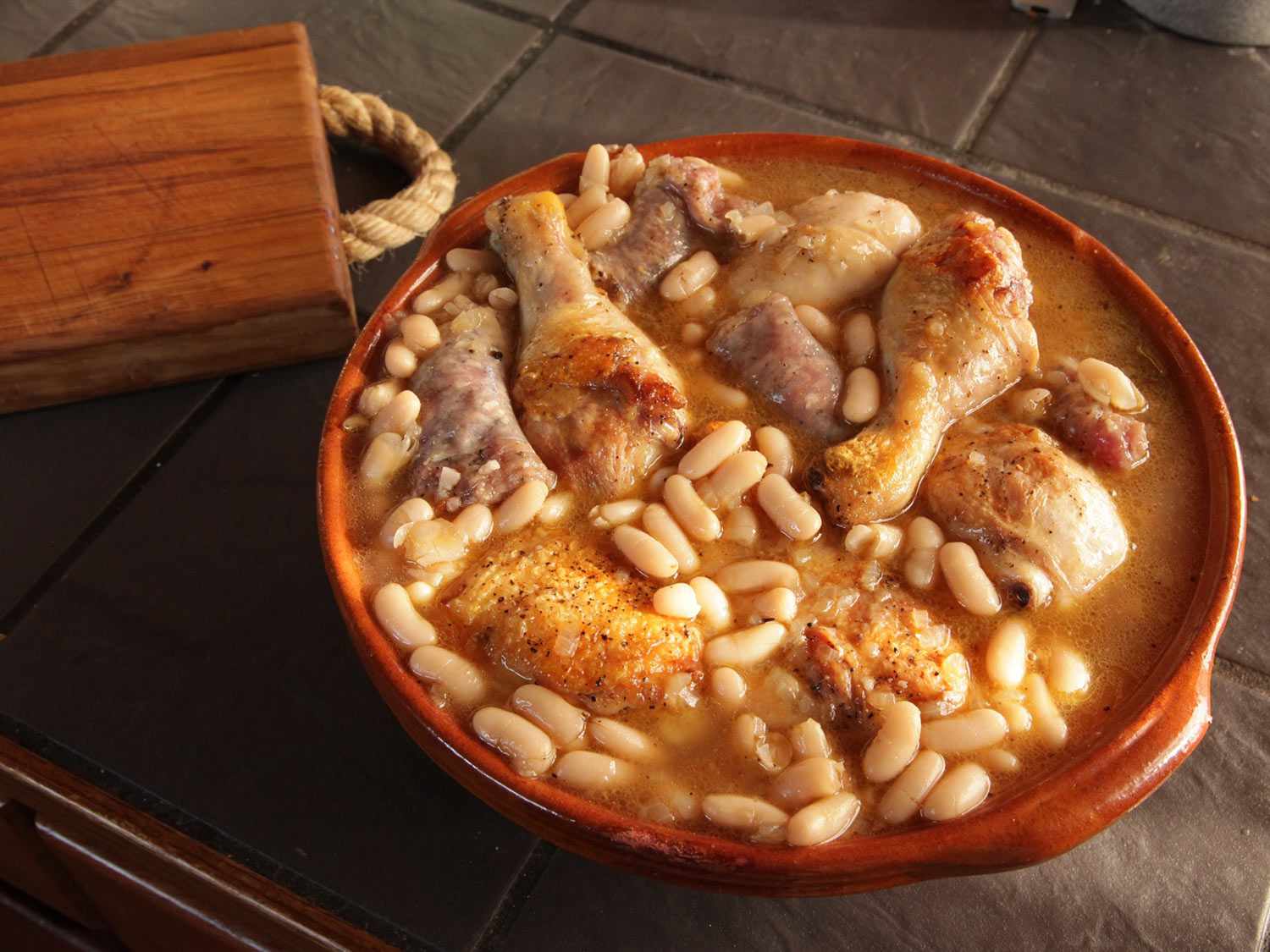
Cassoulet defines what food Toulouse is famous for more than any other preparation. The dish emerged in the rural Lauragais basin during the medieval period, when white beans from the Americas met the preserved meats of Occitan farmsteads. Toulouse's version distinguishes itself by the inclusion of confit de canard and saucisse de Toulouse, the coarse pork sausage seasoned only with salt and pepper. The casserole bakes in a shallow earthenware cassole until a golden crust forms, then cracks and reforms several times during cooking—a textural hallmark that separates properly made cassoulet from mere bean stew. Duck drives the city's meat economy. Confit de canard, duck legs cured in salt and poached in their own fat, appears on nearly every traditional menu. Magret de canard, the breast of a fattened moulard duck, is seared rare and sliced thin. Foie gras, both fresh and mi-cuit, is produced in farms throughout the Gers and Tarn-et-Garonne departments that ring Toulouse. The fat rendered from these birds becomes the cooking medium for cassoulet, pommes sarladaises, and the city's trademark sausage. The saucisse de Toulouse carries protected geographical indication status. Butchers grind pork shoulder and belly to a medium texture, season it lightly, and stuff it into natural casings without emulsifiers or binders. The result is a crumbly, deeply savory sausage that holds its shape in long braises. It functions as both a cassoulet component and a standalone preparation, grilled or pan-fried and served with white beans or lentils. Violet cultivation distinguishes Toulouse from every other French city. The Parma violet, introduced in the nineteenth century, thrives in the Garonne valley's microclimate. Producers crystallize the flowers in sugar, infuse them into syrups and liqueurs, and fold them into pastry creams. The result is a floral note—slightly sweet, faintly peppery—that appears in macarons, candies, and even mustard. The violet is not a novelty ingredient here; it is a registered agricultural product with its own appellation and a supply chain that runs from greenhouse to confiserie. Toulouse's food culture remains rooted in what the surrounding land produces. The Garonne River delivers fish—mainly pike and carp—for matelote stews. Market gardens in the Toulouse plain grow the pink garlic of Lautrec and the black radishes of Pardailhan. The city's bakeries still produce fénétra, an almond-and-lemon tart glazed with apricot preserves, and gimblettes, ring-shaped anise biscuits with origins in medieval spice trade. These preparations do not change with trends. They persist because they reflect the materials at hand and the logic of a cuisine built on preservation, fat, and time.
“Cassoulet bakes until a golden crust forms, cracks, and reforms several times—a textural hallmark that separates the real preparation from mere bean stew.”
What Food Is Toulouse Famous For: Regional Culinary Facts
Toulouse maintains a distinct culinary identity rooted in Occitan traditions and agricultural staples of the Languedoc region. The city's gastronomy centers on long-simmered stews and high-quality pork products.
Legend suggests the cassoulet was created during the Hundred Years' War when residents of Castelnaudary pooled their remaining ingredients to feed soldiers. The dish eventually became synonymous with Toulouse, which developed its own variation featuring local pork and duck products.
Saucisse de Toulouse regulation
The authentic Saucisse de Toulouse is protected by strict standards and must contain a high percentage of pork shoulder and pork belly. It is seasoned primarily with salt and pepper, excluding the herbs often found in other regional sausages.
Lingot bean necessity
The traditional cassoulet relies on the Lingot bean, a white variety prized for its ability to remain intact during the long cooking process. These beans absorb the flavors of the duck confit and sausage during the slow, multi-hour bake.
Duck confit integration
Toulouse cassoulet distinguishes itself by incorporating duck confit, which consists of duck legs cured in salt and then poached in their own rendered fat. This addition provides a depth of flavor that complements the pork-heavy base of the dish.
The Cassoulet Brotherhood
The Grande Confrérie du Cassoulet de Castelnaudary was established to preserve and promote the traditional preparation methods of the dish. This organization oversees quality standards and ceremonial gatherings dedicated to the regional recipe.
Regional fat usage
What Food Is Toulouse Famous For: Traditional Venues
Toulouse offers a variety of venues to experience regional specialties, ranging from bustling municipal markets to traditional dining rooms. Visitors often find the most authentic preparations by exploring local institutions or visiting neighborhood markets to sample regional ingredients.
Marché Victor Hugo
€€market
This central indoor market features numerous stalls selling regional cheeses, charcuterie, and duck products. It is the primary location for sourcing ingredients used in local cuisine.
Le Colombier
€€€restaurant
Located in the city center, this establishment is recognized for serving classic cassoulet in a traditional setting. It provides an accessible entry point to regional recipes.
Place des Carmes
€€zone
This neighborhood area is lined with various bistros and small eateries. It serves as an alternative to tourist-centric zones for those seeking standard daily menus.
Jardin des Plantes
€picnic
A public park offering an outdoor setting for enjoying items purchased from local boulangeries and charcuteries. It is situated away from the primary restaurant districts.
Check availability
Frequently Asked Questions About Toulouse Culinary Traditions
Everything you need to know about what food is toulouse famous for